Play Solana Gen 1 Input key mappingRead docs:https://github.com/mira4sol/psg1_input_binding
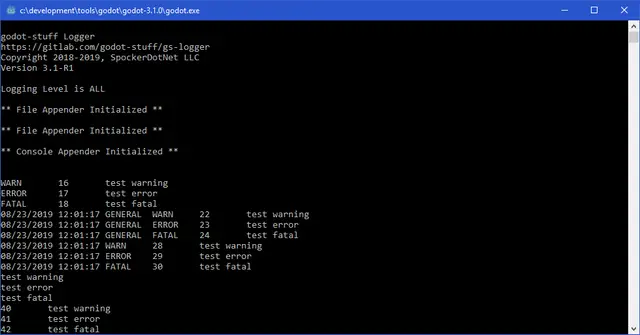
Godot-Stuff Logger 4.0A GDScript based logging utility, it provides a very low level way to debug your Games. There are different Appenders and Layouts available that let you control how the logger output is delivered.This latest release is now installed like a proper plugin. Activate the Logger by going into your Project settings and activating it.Note: Cyclical errors have been correct and a restart of Godot should no longer be required when adding this asset.Features* low overhead* simple to include in your projects* eight different logging levels* output to console or filesystem* html output available (experimental)This version supports the Godot Version 4.0 releases.For more information follow this linkhttps://gitlab.com/godot-stuff/gs-logger/-/blob/4.0/README.md
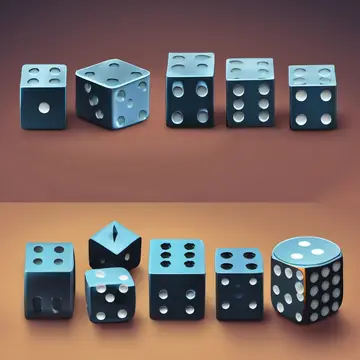
The Dice_Roll plugin for Godot 4.0 is designed to enhance your gaming experience by providing an interactive dice roll mechanism. For optimal performance and functionality, we recommend using the Jolt physics engine.for more see: https://github.com/Rebelion-Board-game/Dice_Roll
ThemeGen — Possibly the best theming solution for Godot to date, setting a new standard to keep you sane while developing themes for complex user interfaces.ThemeGen is a tool for Godot that allows you to easily create themes using GDScript code. The advantage over the UI theme editor is that you can reuse styles, recombine them, and effortlessly reuse and share colours between components.It can also help you to use semantic colours, and to create multiple theme variations, e.g. a dark theme and a light theme.Thanks to the live preview feature, the theme is automatically regenerated whenever the input script is modified, and the changes are immediately reflected in the editor’s preview. This allows for a seamless and real-time development experience.For usage instructions, please see the README: https://github.com/Inspiaaa/ThemeGen
An integration for ink, a powerful narrative scripting language. GodotInk is mainly aimed at C# games, but is completely interoperable from GDScript. - Project home page: https://github.com/paulloz/godot-ink/- Installation: https://github.com/paulloz/godot-ink/wiki#%EF%B8%8F-installation- Quick start guide: https://github.com/paulloz/godot-ink/wiki#-quick-start-guide
This plugin lets you:* dynamically tween between camera position* and/or smooth follow a node of your choise* and/or look at a node of your choise (called watch to avoid naming conflicts with Godots built-in method)See the Demo scene in addon folder.Find the documentation at https://github.com/FilipLundby/DynamicCameraSystem
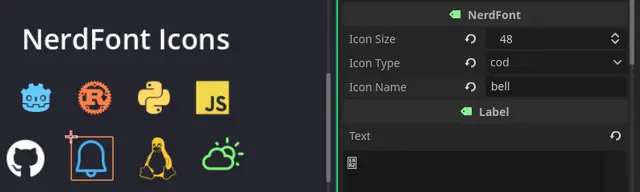
# Nerd Fonts plugin for GodotUse [Nerd Fonts](https://www.nerdfonts.com) 3.4.0 icons in Godot 4.x!Nerd Fonts includes 10,764 icons from 17 icon sets: FontAwesome, Material Design, Devicons, Codicons, Octicons, and more.## UsageCreate a new "NerdFont" Node and configure its values. To change color, simply go to theme overrides and change the font color.All icons can be found under **Project > Tools > NerdFont Icons**.### Icon Categories- `cod` - VS Code Codicons- `custom` - Custom icons- `dev` - Devicons (programming languages/tools)- `extra` - Extra glyphs- `fa` - FontAwesome- `fae` - FontAwesome Extended- `iec` - IEC Power Symbols- `indent` / `indentation` - Indentation guides- `linux` - Linux distribution logos- `md` - Material Design (largest set)- `oct` - Octicons (GitHub)- `pl` / `ple` - Powerline / Powerline Extra- `pom` - Pomicons- `seti` - Seti UI icons- `weather` - Weather icons## Using Different FontsThe plugin includes `SymbolsNerdFont-Regular.ttf` by default (icons only, ~2.4MB).You can replace it with any patched Nerd Font from [nerdfonts.com](https://www.nerdfonts.com/font-downloads):1. Download a font (e.g., FiraCode Nerd Font, JetBrains Mono Nerd Font)2. Extract and copy the `.ttf` file to `addons/nerdfonts/fonts/`3. Update the `icon_font` path in `NerdFont.gd`## UpdatingTo update to a new version of Nerd Fonts:1. Download `glyphnames.json` from the [Nerd Fonts repository](https://github.com/ryanoasis/nerd-fonts)2. Open `utils/dump_nerdfonts.html` in a browser3. Drop `glyphnames.json` into the page4. Copy/download the output and replace `All.gd`5. Update font files in `addons/nerdfonts/fonts/` if needed
Testing Framework for GDScript in Godot 4 Game EngineFeatures: - Supports creation of custom user-defined tests. - Provides an editor dock to display all tests and their results. - Offers a Testing singleton with methods for easy assertions in non-test code.Please see the Github repo for more more information and the latest version of the plugin!https://github.com/accmltr/simple-testing-godot
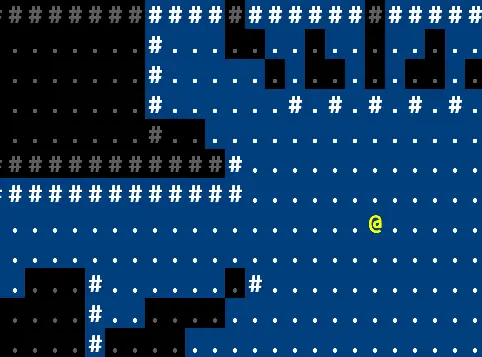
Mingos' Restrictive Precise Angle Shadowcasting is an algorithm used by traditional roguelike games for determining which map cells are in the player's field of view.See the README for instructions on usage: https://github.com/matt-kimball/godot-mrpas-assetlib/blob/master/README.mdA demo project using this algorithm is available on github: https://github.com/matt-kimball/godot-mrpas
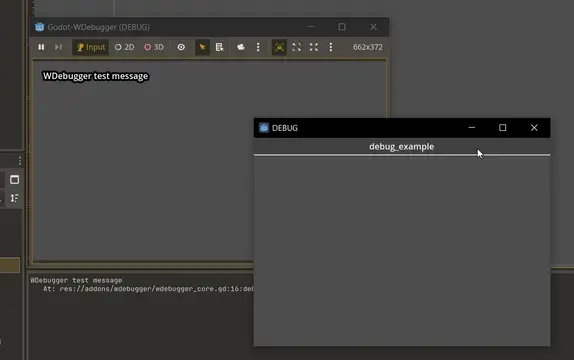
# WDebugger: A Git-friendly DebuggerMost (if not all) of the debugging plugins have two major flaws that I always disliked:1. They are not git-friendly. You can't ignore the debugging functions, therefore they're committed to the git history. This causes: - Bloat in your git history - Unwanted changes to files when you just want to change a debugging function - Conflicts when working in a team - which is probably the most important issue2. They take too much space on the game, which interfers with the testing; Whether be a debugging console that pops up, or just normal GUI buttons you have defined.To Address and fix these issues, I made this plugin. It solves the first issue by separating the debugging functions in a specific file (which you can put in `.gitignore` afterwards); And solves the second problem by introducing a Window node that is separate from the main window.If you enjoyed the plugin, please give it a star on Github: https://github.com/zmn-hamid/Godot-WDebugger## How To TestJust enable the plugin in the settings and run your game. If you're happy with the plugin, you can continue to the next section:## How To Use1. Define your debug functions inside `addons/wdebugger/wdebugger_core.gd` with the given instruction inside that file.2. Open `.gitignore` file in your root directory and write the path to the core file inside of it:`addons/wdebugger/wdebugger_core.gd`3. Enable the plugin and enjoy!## How To Move The Core File1. Cut/Copy the core file and paste it anywhere you want2. Define this new path inside `.gitignore` and `addons/wdebugger/wdebugger.gd` -> `wdebugger_core_path` variable.## ContributionEven though this is a fully functional plugin, any reasonable and beneficial contributionis highly appreciated. Feel free to make your changes and make a pull request or to just simply open an issue Please visit the project on github for more info: https://github.com/zmn-hamid/Godot-WDebugger# LicenseThis project is licensed under the GNU General Public License (GPL) v3. See `LICENSE` for full terms.
A simple state machine implementation. See the wiki (https://gitlab.com/addons-by-aura/simple-state/-/wikis/home) and/ or the in-editor help pages for details.
Quiver Player Accounts allows you to create user accounts for your players. This is an early version of the service, so we only support guest accounts at this time (no username/passwords, etc.), but we'll be adding more functionality in the future. This plugin is used mostly to support Quiver Leaderboards (https://quiver.dev/leaderboards).Documentation: https://github.com/quiver-dev/quiver-player-accounts-godot-plugin#quiver-player-accounts