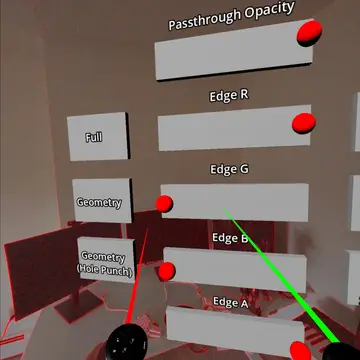
This is a sample project demonstrating the Meta-specific passthrough features supported by the Godot OpenXR Vendors plugin. See the Meta Passthrough tutorial doc for a detailed walkthrough of these features.
Provides nodes for aerodynamic simulation.To get started, add an `AeroBody3D` node to your scene, and add as many `AeroInfluencer3D` nodes as necessary.For Godot Asset Library installs:Ensure that addon files are installed inside res://addons/godot_aerodynamic_physicsThis folder structure allows for this plugin to be used as a git submodule, because of this, Godot does not automatically install it to the correct path.
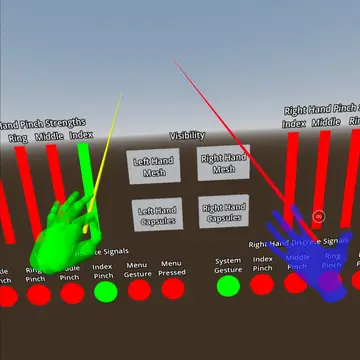
This is a sample project demonstrating the Meta-specific hand tracking features supported by the Godot OpenXR Vendors plugin. See the Meta Hand Tracking tutorial doc for a detailed walkthrough of these features.
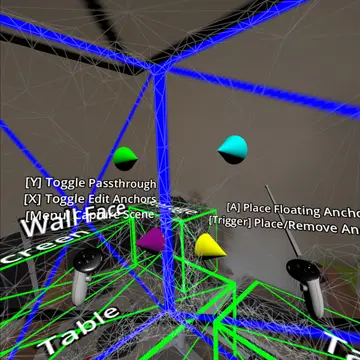
This is a sample project demonstrating the Meta scene and spatial anchor features supported by the Godot OpenXR Vendors plugin. See the Meta Scene Manager or Meta Spatial Anchors tutorial docs for detailed walkthroughs of these features.
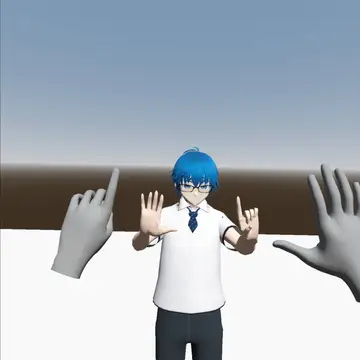
This is a sample project demonstrating tracking features on Meta headsets. This includes body / hand tracking, which is supported on Quest 2, Quest 3, and Quest Pro; as well as face tracking, which is only supported on Quest Pro. For more Meta-specific hand tracking features, check out the Meta Hand Tracking XR Sample.
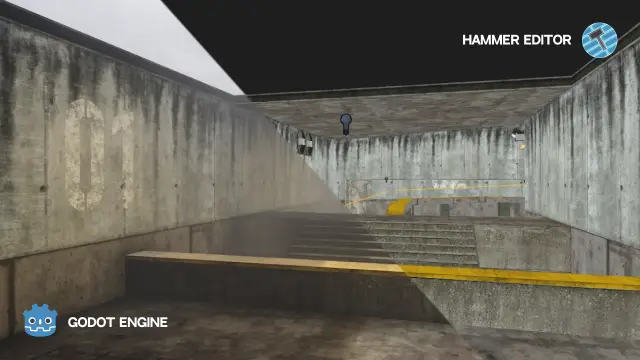
An importer of VMF files into Godot. Useful instrument for people who used to work with Hammer and finds it most comfortable tool for level geometry creation.Features:- Brushes geometry import- Instances support- Native MDL support- Native VMT support- Native VTF support (only DXT1, DXT3, DXT5 supported)- Displacements import (with vertex data)- Entities support- Hammer's Input/Output system support- Surface props support- Material's compile properties support- FGD generator
Gizmo3D encapsulates the Godot Engines 3D move/scale/rotation gizmos into a customizable node for use at runtime. The major differences are that you can edit all transformations at the same time, and customization options have been added. The selection box and axes can be toggled, colors changed, snapping intervals changed, and more. Transformation methods can be easily overriden to customize the default behavior. It is available in both C# and GDScript.Gizmo3D is largely a port of C++ code from the Godot Engine source. The license for the Godot Engine can be found at https://godotengine.org/license/.
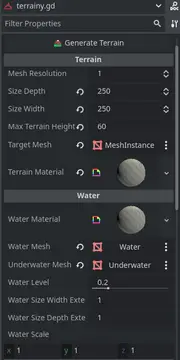
Quickly create natural-looking terrain with customizable noise parameters. This tool is designed to create simple but powerful terrains that do not require manual painting
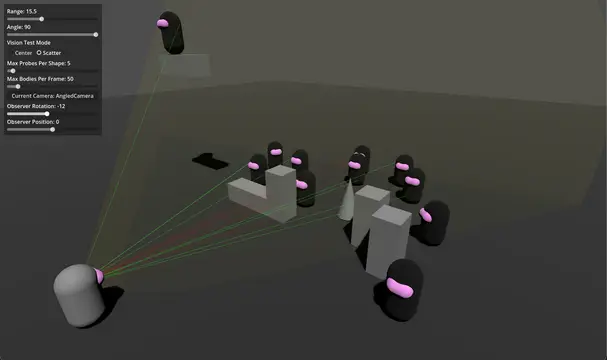
Adds the VisionCone3D node, which tracks whether or not objects within its cone shape can be "seen". This can be used to let objects in your game "see" multiple objects efficiently. Default configuration should work for most use-cases out of the box but several performance tuning options are available. Shape can be edited in the scene view with gizmos and drawing debug information can be toggled on.See GitHub for 4.3 compatible version.
Create basic rooms for your 3D by controlling some parameters and speeding up the process of integrating single rooms into your world
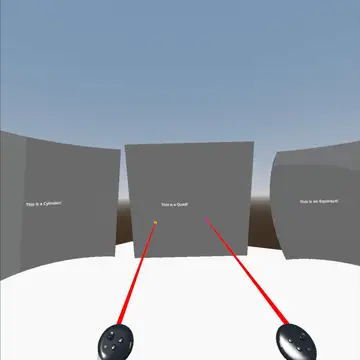
This is a sample project demonstrating the Meta-specific composition layer features supported by the Godot OpenXR Vendors plugin. See the Meta Composition Layers tutorial doc for a detailed walkthrough on these features.
SpriteMesh is a plugin for Godot that allows you to create 3D meshes based on a 2D sprite.